The Bugle App
The Bugle App
Your local news hub
The Bugle App

News


Harbour sink Tigers after Beau bags five scalps

09 February 2026, 7:00 AM

Shellharbour put a dent in Bomaderry’s South Coast cricket finals hopes with a 41-run victory at Artie Smith Oval on Saturday.With four rounds left before the finals, the Tigers are now nine points adrift of fourth spot in sixth position while the Harbour have retained a share of second alongside Bay and Basin.Six Harbour batters made 20 but no one kicked onto a half-century in their total of 8-206 with Tigers seamer Daniel Troy (3-43) the pick of the bowlers.Bomaderry were travelling nicely at 1-88 but the loss of Jarrod Mitchell (33) and Luke Jones (37) in quick succession triggered a collapse and they were all out for 165 under the onslaught of Beau Chamberlain, who bagged 5-57.Kiama celebrated their 170th anniversary weekend with a low-scoring home win over Oak Flats.They were bowled out for 147 after teenage seamer Sam Huetter (4-28) and allrounder Zaied Bin Khalid (3-27) did the damage for the visitors.But the Cavaliers attack combined brilliantly with Brad Ison, Glenn Cleary, Adam Ison and Joe Burgess taking two wickets apiece to win by 49 runs.Lake Illawarra reinforced top spot by cruising past last-placed Ex Servos. Allrounder Jake O’Connell picked up 5-6 as Ex Servos made 135 on the back of Chris Buckley’s 58.O’Connell completed a fine performance with 86 not out off just 37 deliveries, with six fours and eight sixes, as the visitors reached their target in the 18th over.Dolphins captain Tom Dolby top-scored with 53 as Bay and Basin posted 173 before bowling Albion Park out for 116.New-ball pair Cooper Bramley and Jason Moschioni bagged three wickets each as North Nowra Cambewarra rolled the Kookas for 108 and then chased the target down with six wickets and 32 overs to spare.This Saturday, Lake head south to play Bomaderry, North Nowra host Ex Servos, Albion Park are away to Kiama, Shellharbour and the Kookas play out their local derby at Scout Willoughby Oval while Bay and Basin are up against Oak Flats at Sanctuary Point.Ladder: Lake 83, Shellharbour, Bay and Basin 72, Kiama 68, North Nowra 61, Bomaderry 59, Oak Flats 40, Kookas 34, Albion Park 32, Ex Servos 23.In the women’s competition, the Kookas stayed on top of the ladder with a 22-run victory over Ex Servos at Myimbarr.Jennifer Kitchen cooked up an unbeaten 79 and Jacquie Monie added 37 as the home side reached 5-146.Ex Servos lost a couple of early wickets before bouncing back via an unbeaten 50 from Rebecca Carson but could only muster 5-124 in reply.Oak Flats Ratettes defeated Lake Illawarra by 41 runs after opener Anne Boatswain (41) and young allrounder Maya Huetter (26) powered them to 5-126 despite 3-10 from Lake’s Kiana Dovern.The Lakers got off to a strong start but after Dovern fell for 29, they fell away to finish on 9-85.Kiama’s clash with the other Oak Flats team, the Ratatouilles, was abandoned due to rain soaking Bonaira Oval on Friday afternoon while the Shellharbour v Albion Park game was also washed out.This Friday’s draw is Kiama at home to Albion Park, the Ratettes taking on Shellharbour and the Ratatouilles facing the Kookas at Myimbarr, with Lake meeting Ex Servos at Albion Oval.Ladder: Kookas 40, Ratatouilles 28, Ratettes 26, Kiama, Lake 20, Albion Park 18, Ex Servos 16, Shellharbour 4.

The Fly Hunter flocks to stinky loo in Jamberoo

09 February 2026, 5:00 AM

Wildlife educator Steve Irwin’s work with a much-maligned reptile not only earned him his famous Crocodile Hunter moniker, but shone a spotlight on environmental conservation. Now CSIRO entomologist Keith Bayless - nicknamed The Fly Hunter by colleagues - is on a similar mission, to inspire kids to love bugs and science by documenting his search for a rare Australian fly which he rediscovered in a stinky loo near Jamberoo.Bayless found the Clisa australis - or what he colloquially calls the bat poo fly after its main food source - at Barren Grounds national park more than 30 years after it vanished from Australian records.The rare Australian fly was first discovered deep in a bat cave near Kempsey in the 1960s by entomologist David McAlpine. It later turned up in pit toilets in a northern NSW national park in the 1990s before disappearing again. Bayless spent more than 10 years hunting for the tiny insect, before he finally found it near Jamberoo. His dogged hunt earned him his nickname and, like The Crocodile Hunter, Bayless hopes his research will spark young people to be “curious about nature”. The fly specialist, who grew up in the United States in suburban New Jersey and got his PhD from North Carolina State University before travelling to Australia to work at the CSIRO, recalls hunting flies in his suburban backyard and being inspired by Irwin as a young nature lover.“The Crocodile Hunter was certainly beloved when I was growing up,” says Bayless. “And while crocodiles might be a lot bigger than flies, they are sometimes just as hard to see as they hide so well. So I don’t know which is more difficult to spot but I'm certainly happy that I work on flies and not crocs.”While the scientist’s target is much smaller, less aggressive and far more elusive than a saltwater croc his hunting ground - national park dunnies across the east coast - could be considered just as daunting as scouring croc-infested waters.“I’ve checked the walls and ceilings of an embarrassing number of public toilets in parks since 2015,” says Bayless on his hunt for the bat poo fly.“If I’m driving I’ve been known to take a peek inside drop toilets if there’s a car park nearby. "Often entomologists will check structures like toilets because tiny insects are more visible on walls and, in the case of the bat poo fly, the larvae develop in the pit and eat poo.”When Bayless visited the Australian museum and met McAlpine, the first person to describe and discover Clisa australis, it inspired his decade-long hunt for the bat poo fly.Bayless visited the original cave site near Kempsey where McAlpine worked with bat experts to discover the species but found that the cave was “on a cliff and surrounded by stinging trees“.“I didn’t have the right gear to get in,” says Bayless.So instead he started looking in the last place they were sighted - national park pit toilets. After years of painstakingly scouring smelly dunnies found the rare species in a trap he had set up near a pit toilet in Barren Grounds, off Jamberoo Mountain Road. “It was nestled under land leeches in a sample from a dark, humid gully,” he says. “That fly had never been collected by trapping before.”Bayless says he felt “elation and relief” after years of searching for his tiny target.“But there was also a fair amount of confusion because it hadn’t been spotted this far south before,” he explains. The finding spurred him on to widen his hunt and not long after his first discovery Bayless spotted a live Clisa australis sitting on a “loo roll” near Merimbula.“It really stood out, blue and shiny, on the white background of toilet paper,” says Bayless.Now the entomologist’s hunt for the tiny fly - which is closely related to the fruit fly species - has been turned into a children’s book called The Very Stinky Fly Hunt.Written by CSIRO science communicator Andrea Wild, the book aims to inspire kids to follow their own scientific adventures just like Bayless and to also elevate the humble fly from household pest to important pollinator.Bayless says the rediscovery of the Clisa australis could help scientists better understand the migration patterns of the rare species - it has since been spotted in Victoria - and also mitigate the spread of agricultural diseases.“Clisa australis is closely related to fruit flies so it's useful to compare the two to develop better ways to control agricultural pests,” says Bayless. “We need to learn a lot more about these flies and their rediscovery will help us understand their role in the ecosystem and how flies evolved from feeding on waste to feeding on plants.”Bayless says flies have an unfair reputation for bringing disease and ruining crops but only one per cent of the species has a negative impact on humans and agriculture. The rest have an important role to play in building healthy ecosystems. “Flies are the second-most important pollinating insect after bees,” says Bayless. “The cacao tree, grown for chocolate, can only be pollinated by flies and the blow fly is the main pollinator of mangoes alongside bees.“Farmers often throw fish heads under their mango trees just to attract flies for pollination. "The Very Stinky Fly Hunt is a great way for curious young people who want to learn more about the species and what it’s like to be an entomologist.”

Tatum fuming as Hawks’ NBL title defence evaporates

09 February 2026, 3:00 AM

The Illawarra Hawks will be playing for pride in their final three matches of the NBL season after their title defence ended in Auckland on the weekend.After keeping their playoff hopes alive with a thrilling 100-99 home win over Adelaide on Thursday night, they suffered an 11-point loss to the Breakers on Saturday.New Zealand leapfrogged the Hawks into seventh spot and with an 11-19 record, the champions can no longer qualify for the playoffs even if they win their remaining three fixtures.After breaking the franchise’s 25-year wait for a second championship last season, the hot-and-cold campaign never got out of first gear.Hawks coach Justin Tatum was disappointed with the way they struggled from the outset against the Breakers despite knowing their playoff dreams were on the line."It wasn't what I expected from my team," he said."Felt like we should have played with a sense of urgency.“The inconsistency of this group has been a little frustrating here and there, but we have a great group of guys in that locker room."The Hawks trailed 7-2 after an early Breakers blitz and the home side’s three-point shooting put the visitors on the back foot with NZ taking a 61-50 lead into the half-time interval.Tatum rolled the dice on a smaller line-up, benching star centre JaVale McGee for the entire second half despite his tally of 15 points and seven rebounds in the opening two terms.Todd Blanchfield and Tyler Harvey (who finished with 19 points apiece) started heating up in the third quarter and after they had trailed by as much as 16, they trimmed the gap to 84-80 by the start of the fourth term.QJ Peterson made it a two-point game soon after the start of the final quarter but then fouled out, taking a bloodied eyebrow up the tunnel.Davo Hickey fell one assist shy of a triple-double, recording 14 points, 10 rebounds and nine assists but the Hawks faded down the stretch to go down by 11 with the Breakers keeping their faint playoff hopes alive.‍The Hawks return home to WIN Entertainment Centre on Friday night for their final home game of the season against Sydney, looking to make up for the disappointment of missing the playoffs by beating their fiercest rivals.In better news for the Hawks, the federal government has granted Harvey permanent residency and the club will continue to support their co-captain and his family as they work through the process of becoming Australian citizens.Harvey’s permanent residency places him on track to be eligible to play as a local player in the NBL from the 2027–28 season, subject to league confirmation.Since arriving in the Illawarra ahead of the 2020–21 season, Harvey has become one of the most influential figures in club history, a two-time All-NBL First Team selection (2021 and 2025) and one of the league’s most reliable guards.

Lions celebrate major milestone in children’s eye health

09 February 2026, 12:00 AM

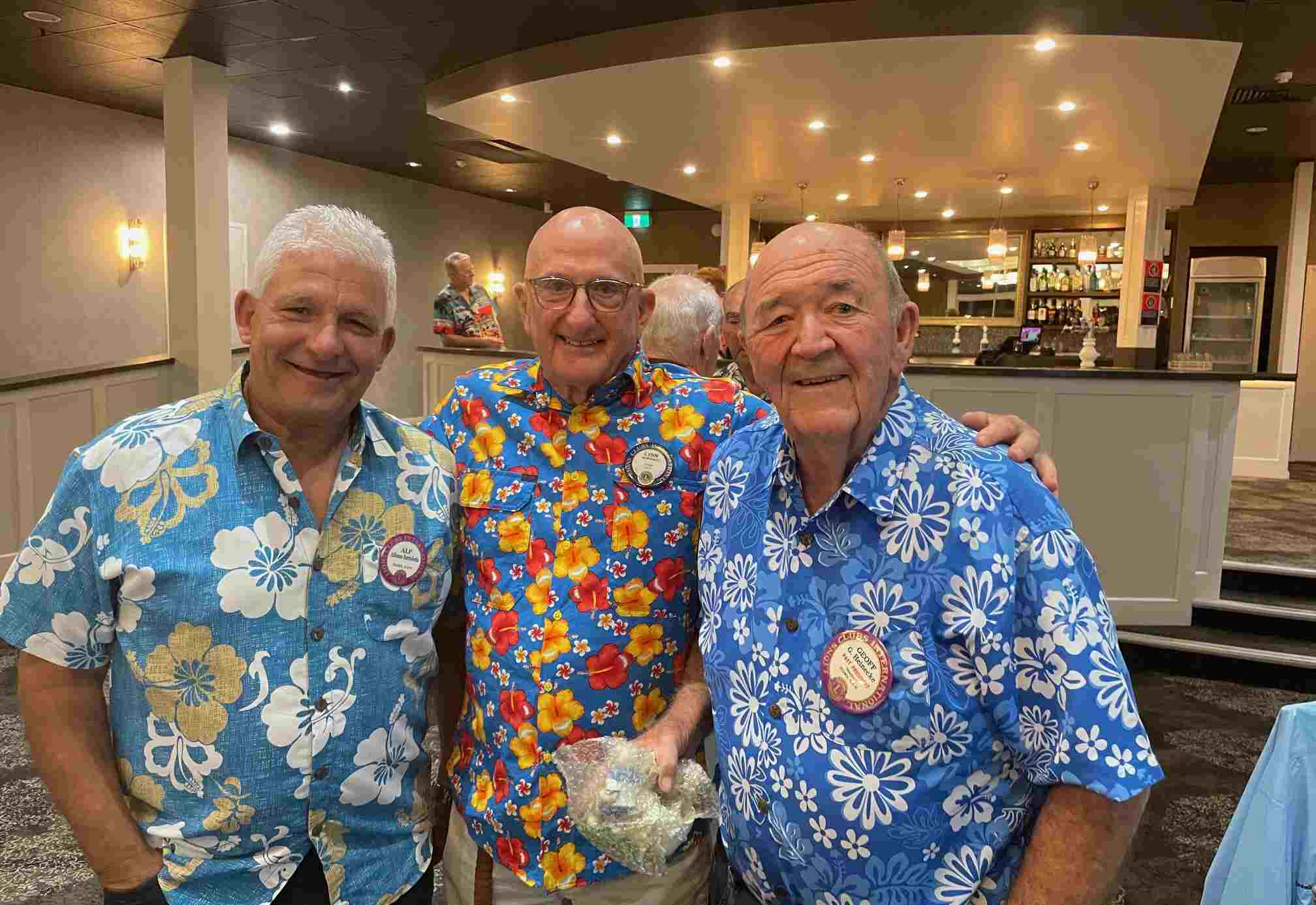
The Lions Clubs of the Kiama–Shoalhaven region is celebrating a big win for local kids’ eye health, following the successful accreditation of new Lions Eye Health Program (LEHP) screeners and the completion of the first children’s vision screening by Minnamurra Lions.The screening was delivered with strong support from Kiama Lions, Gerringong Lions Club, Shoalhaven Heads Lions Club, Lions Club of Tahmoor Inc, and Woonona and Canberra Lions Clubs, demonstrating the depth of collaboration across the region. The activity was proudly conducted in partnership with Gerringong Surf Life Saving Club, strengthening ties between local service organisations.Training for the new screeners was led by District N2 LEHP Instructor Jenny Barclay, whose expertise has been central to building capability across the zone. As a result of her program, the Kiama–Shoalhaven region now has more than 24 accredited screeners, significantly expanding local capacity to deliver early‑intervention vision checks for children.The accreditation also welcomes two new LEHP‑active clubs - Gerringong Lions and Shoalhaven Heads Lions - further strengthening the region’s long‑term commitment to improving children’s eye health. Planning is already underway to develop at least six trained facilitators, with the potential for one or two new instructors in the near future.This momentum continues, with Kiama Lions set to conduct the third Lions Eye Health Program – Australia screening on 1 March at the Kiama Surf Life Saving Club, delivered in partnership with the Kiama Kingfishers. The event will provide another important opportunity for local families to access free, early‑detection vision screening for their children.A Lions spokesperson said the achievement reflects “the best of Lions collaboration - clubs working together, sharing skills, and building a service that will benefit children and families for years to come.”For the Kiama–Shoalhaven region, these milestones mark the beginning of a stronger, more coordinated approach to children’s eye health, one built on teamwork, training, and a shared commitment to community wellbeing.

Deborah’s legacy of love is a true work of art

08 February 2026, 10:00 PM

Walk into Number 19 Gallery in Jamberoo, and one of the first things you spot is a collection of vibrantly coloured paintings instantly evocative of the South Coast.Behind that flash of colour lies a remarkable story of talent, triumph, love and loss.Painter Deborah Chisholm passed away on 15 December.She leaves behind a grief-stricken husband, Ross, who mists up multiple times a day and says little beyond: “I miss her so much. She was such a talented person.“She loved this place, the cows, the horses, the lyrebirds, the blue wrens. We have blue wrens everywhere. She was inspired.”A flyer for her 2024 exhibition at Fern Street Gallery in Gerringong, before her cancer diagnosis, declared: “Colours pop and fizz, and patterns cleverly emerge, layer upon layer, like Russian nesting dolls, suggesting the grandeur of everyday existence built upon the microscopic framework of life itself.”Deb described her creative process: “Suddenly I’ll visualise a painting, its colours and patterns. The South Coast is truly my haven – the green hills, the bird life, the vastness of the ocean – all hold a powerful artistic potency.”Their beautiful house up on Fountaindale Road edges the local rainforest known as The Brush, a remnant of the region's lush temperate rainforest.Each evening, the loved-up couple sat at a table in the garden, admiring the Jamberoo Valley view with a glass of wine. “It was unreal,” Ross recalls. “Just the two of us and the dog. You couldn’t get any life any better.”New arrivals in Jamberoo since moving into their forever home in 2021 amid the COVID-19 pandemic, both professionals from the Sutherland Shire – Ross an engineer, Deb a graphic designer with her own business, they named their new home Omaroo, an Indigenous word meaning “beautiful view”. It was their retirement dream.They poured money, love and effort into remodelling gardens and lawns.The house brims with Deb’s paintings. Prints sell well in Allowrie Street, but Ross will never part with the originals.Covid isolation deepened their bond, sparking Deb’s artistic renaissance. After decades as a graphic artist, she turned to vivid paintings of South Coast landscapes.Their dreams were shattered on 24 August 2024 with her diagnosis of aggressive brain cancer and she was given six months to live.Surgery left her severely disabled - Ross became her full-time carer. Early efforts to get help from the NDIS frustrated him deeply, leaving him with the conviction that the scheme is heavily rorted and in urgent need of reform.Often unwell, she painted one-handed; her studio holds half-completed works.After 14 years together, they married on 1 January 2025. “It was a perfect day,” Ross recalls.They knew it couldn’t last.Loss echoes everywhere: an unused pizza oven on the back lawns, an unused, covered spa, a brand-new Porsche SUV driven only once - to bring Deb home from hospital. She wanted to die at home, but illness returned her to hospital for her final weeks.Her last wish: Ross by her side at the end.He missed the moment by five minutes. Telling the story, he chokes up again. A terrible regret.Artistic to the end, Deb left a final card in elegant script with a splash of colour on the cover: “Dear husband, my soulmate, my rock.“I am so glad we found each other! We’ve had plenty of fantastic times away overseas and not only that at home spending time together and enjoying life.“You have given me more than I could ever ask for in dedication and devotion in looking after me through thick and thin, and I am eternally grateful for your support.“Even though you can’t see me, I will always be hanging around sitting next to you on the chair looking over the beautiful valley. "My spirit will be mingled with the mist rising from the valley. "It will be in the song of the lyrebird singing to you melodies from the bush. It will be the rustling of the wind through the trees.“Just talk to me. I will hear you. I may not answer but just know I can hear you.“Be brave and soldier on. And I love you more than you could ever know.”

Copley accuses Labor of ‘marking time’ in Kiama electorate

08 February 2026, 7:00 PM

Serena Copley is fed up with what she perceives as a lot of talk but not enough action in the Kiama electorate.The former Shoalhaven councillor has been endorsed to run again for the Liberal Party in the state election early next year after she was a distant runner-up to Katelin McInerney in last September’s by-election.Copley said “the desire to serve my communities never left me”.“I think it's important to have as much time as possible to work with the community - issues don't just turn up a matter of weeks before an election,” she said.“They are there all the time and if you're serious about the community you want to work on them for as much time as possible and I was very keen to keep going and keep talking to people and working towards solving some of the concerns that people have in our electorate.“I'm in it for the long haul, not just you a flash in the pan before an election.”Copley said it appears McInerney and the Labor Party are happy to “mark time” in the 18-month period from the by-election to next year’s statewide poll. “There's a lot of reading of Labor media releases and talking points but we still have Ground Zero, same old, same old with a lot of our issues.“Our infrastructure is at breaking point. We're not getting the movement on promised infrastructure that we should be getting and those are the things that I will be pointing out. “The community is coming to me and making it quite easy to do my job because they're coming to me and saying what about this, what about that? And I agree with them. “We can't just mark time until the next election, we actually need to get things done now and it's important to act now for the community. I'll be fighting for those improvements.“People that are coming to me are starting to get really frustrated. It's one thing to just trot out statements about good intentions but what we absolutely need is a Member of Parliament who will actually fight for and deliver for that community.“I do have a track record of delivering for my community and I will continue to be a community champion - that's what's important to me.” Copley is pleased to see increased development occurring on the South Coast but warned that transport, schools and big-ticket infrastructure items needed to be planned in conjunction with the expected population explosion.“My real concern is with projects of the volume and density that are being proposed that we absolutely need to make sure that the current infrastructure is upgraded to be able to handle the increased density and so that it provides quality living for our residents and our community into the future,” she added.“We need to be delivering more schools and it can't take the amount of time it's taken so far. Calderwood Public School has been on the table since 2023. “We need to get these facilities built and being delivered for the public as soon as possible because you can't retrofit these things - they need to be planned with the projects that they are announcing, otherwise our community into the future is going to be dealing with bigger issues, unless we get this sorted now.“We are going to need to have a world-class transport system.A major change since she was unsuccessful in the by-election in September is Kellie Sloane taking over from Mark Speakman as the leader of the Liberals in a bid to reinvigorate the Opposition.“Kellie is an outstanding person and a wonderful leader so I'm really excited to continue on with her and have her representing us as a leader,” Copley said.“I got to know her quite well through the by-election - we worked together quite heavily at that time and got to know each other.“She's such an authentic person who cares deeply about local issues in the community. She is a wonderful communicator and as you've seen just in the recent tragedy that happened in Bondi, she's genuine.”

Society needs help bringing history back to life

08 February 2026, 7:00 AM

South Coast History Society has grown significantly over the past decade but it needs help to continue bringing the stories of yesteryear to life.The Society, which covers the vast coastal expanse from Wollongong to the Victorian border, publishes the popular Recollections quarterly magazine and runs an in-depth website featuring tales of the past.It is “Australia's largest, most innovative, most active history society”, according to founder and president Peter Lacey.But it can’t run on volunteers alone and the Society is putting out the call for donations to keep its operations running smoothly.The Society needs to raise $40,000 per year to meet current demands, an ongoing challenge for the community-focused, volunteer organisation.“We’re run totally by volunteers, and what we're trying to do is to simply provide interesting South Coast history to anybody, anywhere in the world who's interested, and particularly to people who live on the South Coast,” Lacey said. “I guess you could say that we're Australia's largest purveyor of history, and the beneficiaries of that are the people who are interested in history or live on the South Coast. We've been going for almost 10 years now.“Our philosophy is that it's our history, it's your history, and we shouldn't charge a monetary amount of money to share it with anybody. “So right from the start, Recollections magazine has been free and it has been extremely popular as a result of that. We now have to print at least 4,000 copies of each edition.”The Society’s website has been live for a year and has received hundreds of thousands of hits from people all around the world.Lacey said they also deliver talks to community groups and liaise with the other 22 locally-based historical societies up and down the coast. The local history groups are generally focused on their town and running a museum whereas the South Coast Society is concerned with recounting the tales of the past.“We don't have a museum. We don't have a library. We just are interested in the stories,” Lacey explained. “Using a marketing analogy, we're interested in the sizzle, not the sausage.”Lacey said he would much prefer to be focusing on history rather than appealing for donations but “fundraising is just a fact of life”.“We get nothing from councils. We get nothing from the state or federal governments. We're totally reliant on commercial organisations, Rotary Clubs or groups like that, and primarily on individuals who simply support the Society. “With the latest edition of Recollections, we made an appeal to people saying, would you assist us by giving us a donation? Last year, we spent $40,000 basically on printing Recollections. So we've got to raise a considerable amount of money for a small volunteer group organisation.“If you're interested in history, if you're interested in supporting us, please do.”Lacey said one of the joys of the Society was reliving quirky events from the distant past, such as the article in the most recent edition about whales at Twofold Bay around the turn of the 20th century providing “a miracle cure” for rheumatism.Patients were rowed to the whaling station where blubber would be cut out of a carcass and the sufferer, stripped naked, would stand inside the whale for two hours at a time.“The whalers would dig out a piece of blubber and you would climb in there,” Lacey said.“It's a fascinating story.”A patient told the Sydney Bulletin in 1896: “For exactly 12 months, the rheumatism left me. Then it came back again as bad as ever. The smell has never left me: that dead whale haunts me still.”If you would like to help fund Recollections, send a cheque to South Coast History Society, 90 Whitby Wilson Road, Quaama NSW 2550, via a deposit into account (100112005) with Horizon Bank (BSB 802-124) or over the phone at 0448 160 852.

Karaoke bar injects energy into nightlife

08 February 2026, 5:00 AM

Dumplings, cocktails and bad advice is the name of the game at Uncle Fuku’s, which is now open for business on Collins Street. The team behind Miss Arda, Emily Lewisman and Lauren McWatters, are the masterminds behind the Japanese-inspired tapas and karaoke bar. The two colleagues and friends truly are what many would consider the dream team as they designed and refurbished the entire venue themselves. Stepping inside Uncle Fuku’s is like entering a giant, red cheeky lantern. And yes, you read that correctly, cheeky. There are various posters on the walls such as, Send Noods and Surely Not Everybody Was Kung Fu Fighting that certainly set the mood. That’s the thing about Uncle Fuku’s, it pushes the boundaries of what Kiama is used to and it’s here to inject some new energy into the local nightlife. "It's different, it’s fun, it’s exciting,” Lauren said.“For those concerned about the name (pronounced foo-koo) Lauren assures me Fuku is simply a unique name and isn’t intended to be offensive. Fuku primarily means good fortune, luck, or blessing. It is an auspicious term frequently used to represent happiness and prosperity, such as in "fukubukuro" (lucky bags) or on lucky items like the maneki-neko cat.The food at Fuku’s is top notch and while it is designed to be shared, I will admit I guarded my food like a hangry hound because it was that good. The edamame beans alone were enough to convince me as they came drizzled in oil and garnished with sesame seeds. This created a melt-in-your-mouth experience that’s unusual for edamame beans. Next on the menu were the vegetarian spring rolls, which were satisfyingly chunky (because when it comes to spring rolls, size does matter) and crispy. Sashimi is also on offer at Uncle Fuku’s. As someone who usually chases her sashimi with a side of raw fish anxiety, I was relieved to discover the sashimi was more akin to smoked salmon. Also of note, was the Mushroom Bao, which comes served in a bamboo steamer and is a filling option for the vegetarians among us. For the less adventurous, there are also potato gems with a secret house seasoning (I’ll let you discover the name of it for yourself).Once dinner is over, there is the option of karaoke in the Tone Deaf Temple, but don’t worry, it’s sound-proofed. If you do suffer from stage fright, you can summon a spirit with a helpful button for a little bit of Dutch - or in this case, Japanese - courage. Before wrapping up your evening, don’t forget to leave some sage advice on the Mirror of Misguidance. Uncle Fuku’s is open from 11am-10:30pm, Thursday through to Monday.

Back Inn to the future with balcony plan

08 February 2026, 3:00 AM

The Kiama Inn Hotel is set to go back to the future with plans to install a new steel balcony which will sweep around the corner of Terralong and Shoalhaven Streets.When the local landmark was built in the late 1800s it had a wrought-iron verandah with 13 posts dotted around the footpath on the corner.Kiama Inn has lodged a development application with Kiama Council, which is on a 28-day public exhibition period until 18 February.The $990,000 upgrade to the hotel also includes the installation of a new lift to cater for all floors and moving the gaming room to the covered barbecue area in the south-eastern part of the hotel. If approved, the balcony will encroach on Council land but that is unlikely to be a conflict of interest issue.Kiama Council’s Director of Strategies and Communities, Ed Paterson, said they were seeking community feedback about the retro design.“Reinstatement of the double hung verandahs is something that the Kiama Town Centre Study and Development Control Plan certainly encourages,” he said. “We've just got to work through the finer detail.”As far as a potential conflict of interest, under the Planning Act, whenever a DA is lodged that includes Council land, or involves an employee or a Councilor, Council is required to hold an extended notification period and submit declaration to say how they will manage the conflict.The site was initially home to the Fermanagh Hotel, which was built by James Barton in 1849, before the two-storey wooden structure was demolished and replaced four decades later by George Tory, who built a three-story masonry hotel.Tory’s Hotel included 60 rooms and wrought-iron lattice verandah in the late Victorian era architectural style.Architect Peter Jay, in his submission to Council, wrote that the proposed development would be beneficial without detracting from the hotel’s historical significance.“The proposed new gaming room, lift, and balcony at the Kiama Inn Hotel, which involves relocating the existing gaming by converting an existing covered BBQ area, the provision of a new balcony and lift, and associated works, will have no adverse impact on its established heritage significance.The original concept for the Elan development. Kiama Council has also reached an agreement with Sydney-based developer Level 33 over the proposed Elan development at Burroul Street which overlooks Surf Beach. Level 33 initially lodged a DA for a four-storey development with 15 housing units before requesting an additional level with five more residences.The developer took the matter to the Land and Environment Court and after a conciliation conference, the two parties agreed to a modified plan which will allow for the extra five units on the fifth floor.“Rather than it being a separate standalone DA it was a new development application that sought to amend the approved development application and we were seeking legal advice around purely the mechanics of how that worked,” Paterson explained.“The applicant took the matter to court on a deemed refusal and that was the only contention that Council had - just around the mechanics of that process working and through mediation, that was very quickly resolved at little to no expense to both parties.” The NSW Government changed the height controls as part of its low-mid rise reforms and Elan fits the criteria for a five-storey development as an R3 zone piece of land as it is just within 800 metres of the town centre.

Bluey’s Big Play a success for young and old

08 February 2026, 12:00 AM

Some months ago while pleasantly engaged in nanna babysitting duties, I was summoned by Grandson No.2 to curl up on the couch with him and watch a film of the stage puppet show featuring Bluey, Bingo, Bandit and Chilli.Now if you happen to be unfamiliar with these names, you need to do some research. Because if you don't, you'll be missing out on some good old-fashioned fun.And quite possibly, one of Australia's most beloved creative products, now seen by the world, and certainly loved by young and old. There is a sweetness, a wide-eyed innocence to Bluey that has endeared the show to so many .Learning through immersive play is the theme, and in each episode, there is a lesson taught and learned. It's a simple, and universal concept. Just think of how baby lion cubs learn survival skills from their mum. Most humans learn through play from a very young age. As do, apparently, Blue Heelers.For fans of the animated ABC series Bluey, watching a film of a live stage play, with puppeteers manipulating larger than life doggy characters onstage, is yet another way of enjoying this wonderful creation. Grandson has watched it so often, I'm sure he knows the script.And so imagine my absolute delight when a new stage show is advertised, coming to the Wollongong Entertainment Precinct recently. An absolute holiday must, a treat for Grandson, or that is my story. (I am actually using him as my excuse for buying tickets).On a very rainy afternoon we battle the holiday traffic, and the accompanying parking juggle, and because Nan has foolishly underestimated the weather conditions and therefore the extra time needed to circumnavigate Wollongong, we arrive, breathless from running, with mere minutes before showtime.I artfully dodge the merch table, so cleverly placed for us to have to walk past, though Grandson is aware, very aware. I foil him though, and we enter the theatre to take our seats.Oh, the cacophony!The unmistakable sound of countless excited small children shrieking with anticipation, in a confined, dimly lit theatre space is an initial shock to my system, but we look down at the stage and grandson turns to me with the biggest grin, and hugs me, and I know this is going to be so worthwhile. This is, after all is said and done, Making Memories.The show begins with larger than life dancing ibis, and flying birds on very long thin poles, wielded by talented and very lithe young puppeteers, who are wearing kneeguards. As the show progresses, it's obvious why. These puppeteers could possibly be gymnasts - their puppetry is stunning. They move with speed and get themselves into the most awkward positions with absolute grace. Of course, the puppets are what you are supposed to be watching, and I'm sure the children are, but I am marvelling too at the talent and the athleticism of the puppeteers.The colour, the flashing lights, the music, the set changes, the storyline, the invited audience participation, it is all so cleverly done.The performance lasts just under an hour, and rightly so. Any longer may be a bit torturous for some, possibly the accompanying adults.The average small human attending is probably no older than five or six, with some a lot younger, and so the audience’s attention span is limited.The show's creators know this and so the storyline teaches a simple life lesson. Bandit, Bluey's Dad, uses his phone too much. Bluey and her little sister Bingo want him to play with them, so they hide his phone.Chilli, Bluey's mum, helps them, and also talks affectionately to Bluey about how important it is to be a kind big sister to Bingo. Simple.No show for young children is complete without bubbles cascading down from the heights above. Or a raucous game of KeepyUppy, which literally has the audience yelling for more, including me. For the uninitiated, Keepy Uppy is a game of yes, you guessed it, the audience members keeping very large inflated balls up in the air by way of batting them in the air with their hands, back and forth, up and down through the seating. Perhaps you've seen this practice before, at sporting events. Let me assure you it was a very well received finale for Bluey’s Big Play on that wet afternoon in Wollongong.Now it's time to leave the auditorium, show's over.Did I mention the merchandise being lavishly and magnificently displayed in the foyer? And the crowds of adults being separated from their dollars by way of small human coercion? Blocking the exit?Did I pull off a sneaky Nan ploy? Did I manage to escape into the rainy street, having foiled Grandson for the second time?I'll leave you to guess.

Walkbuy is growing, thanks to communities like Kiama

07 February 2026, 7:00 PM

Kiama was one of the first communities to welcome Walkbuy, and it continues to play a special role in shaping what the platform is becoming. From the beginning, local businesses embraced the idea of connecting with customers in real time through short, snappy ‘Pulses’ (Deals) on the Walkbuy app.As Walkbuy continues to evolve and expand into new regions, Kiama remains at the heart of that journey.Since launching in Kiama, Walkbuy has been learning, refining and improving the platform based on real feedback from towns just like this one. Businesses are becoming more comfortable experimenting with Pulses, and shoppers are starting to discover new deals, new products and new reasons to stay local.Behind the scenes, Walkbuy is also working on the upcoming release of new and exciting innovations, designed purely to increase customer and retailer engagement.These improvements are focused on making it easier for businesses to connect with their community and for locals to see what’s happening around them in real time.We’re looking forward to rolling these out and continuing to enhance what is becoming a genuinely valuable local connector.One of the key partners in this journey has been Burnett's on Barney, a much-loved Kiama business that has shown how Walkbuy can be used not just to promote offers, but to build stronger connections with customers. From homewares and local art to garden essentials and great coffee, Burnetts has embraced Walkbuy as another way to stay visible and engaged with the local community.As more retailers join and share their own updates, Walkbuy becomes increasingly valuable for locals and visitors alike. Every Pulse adds to the wider story of what makes Kiama unique and worth supporting.We’re proud to still be working alongside Kiama businesses as Walkbuy continues to grow, and we’re excited about what’s ahead. If you're a local business and not yet on Walkbuy, now is a great time to get involved.The app is completely free to use, easy to get started with, and designed to help you reach customers who may not yet know you exist. Likewise, for local shoppers, downloading Walkbuy is a simple way to see what’s happening just around the corner.Walkbuy is about making local shopping easier, more visible and more vibrant. Thank you, Kiama, for continuing to support us as we build something together.Please note - this is paid content

Unsung cultural gems of Kiama not to be lost

07 February 2026, 5:00 AM

Rhian Thomas is an architecture post-graduate from the UK who is visiting Kiama. This her second article on her thoughts on planning issues in the town.In light of recent development proposals in and around Kiama, such as Shoalhaven Street, Akuna Street and future projects west of the Princes Highway, it is important to celebrate the everyday elements of the town which make it unique. It is the quieter, familiar places that shape how Kiama is experienced and remembered by those who live hereThe rockpoolKiama’s rock pool is a place where locals gather for a relaxing swim, while embracing the elements. Integrated into the rock bordered by a grassy verge, people sunbathe, read, socialise or simply sit and watch the ocean. The Surf ClubSurf Life Saving Clubs are undoubtedly large parts of Australian coastal towns and Kiama is no exception. Established in 1908, Kiama Surf Life Saving Club is a physical presence on Surf Beach and one within the community. Run by volunteers across coaching, patrol and management roles, the club brings together a variety of people, teaching younger generations how to safely navigate the sea. Here local knowledge, gained only through experience, is passed down.Repurposed buildings and old signsScattered throughout the town, repurposed buildings preserve the architecture and history of Kiama. For example, the old fire station now acts as a community arts centre exhibiting the work of local artists. Similarly, faded letting on new facades offer glimpses into Kiama’s history, revealing the layered development of the High Street. The Post OfficeCommissioned in 1878 at a cost of £3,300, the Kiama Post Office and its clock tower continue to serve their original purpose. An iconic silhouette at the bottom of the High Street, the structure remains one of Kiama’s most recognisable landmarks. This building acts as an example of architecture designed to last and adapt over time.Hindmarsh ParkJust off the High Street, the covered areas beside the playground provide a casual place to gather. Throughout the day, people stop to eat, chat and spend time outdoors. In the evenings, groups meeting for barbecues or with takeaway food can be observed unwinding whilst kids play on the park equipment. The adjacent green space also hosts events such as school activities and seasonal celebrations. Visible from the High Street, it provides a natural buzzing backdrop and further contributes to the town’s relaxed, welcoming atmosphere.As Kiama continues to grow and change, these unsung but meaningful places serve as reminders. Kiama is defined not by major developments, but by the everyday spaces that support community life.

Kells back on board to support Kiama Rugby Sevens

07 February 2026, 3:00 AM

Kells is continuing its tradition of giving back to the community by returning as the major sponsor of the Kiama Rugby Sevens for the fourth year in a row.And they will be on board for the next two as well.The 54th annual tournament will be held at Kiama Showground on Saturday, 28 February, starting from 8am with 44 teams coming from far and wide to compete for the prestigious trophy.Kells has been in Kiama since April 2020 after acquiring Martin & Holmes Legal, becoming the sixth office for the law firm throughout the Illawarra and Sydney regions.Martin & Holmes Legal had operated out of the Kiama area for over 20 years and Hatfield said the acquisition by Kells was a smooth process due to the aligned values and the synergies of each firm.It was a tricky time to set up the Kiama office given the start of the COVID-19 pandemic but Kells negotiated their way through the turbulent period to establish a foothold.Kells were initially located at offices on Terralong Street before moving in mid 2024 to their current picturesque location overlooking Black Beach.“It was challenging, as you could imagine. But we've got great people here. The vast majority of the firm were working remotely,” Kells partner Michael Hatfield said.“It’s been great being here in Kiama. We've expanded the service offering. We've got commercial law services, family law services, personal injury services. “We now have at any given time three lawyers here that provide a full complement of legal services.” Hatfield, who lives in Kiama with his family, said the Rugby Sevens was a great event, both as a sporting carnival and a community gathering.“We are thrilled at the chance to support a flagship local sporting event, and it brings the community together, showcasing what Kiama has to offer,” he said. “It reinforces our commitment that we have to supporting local initiatives. “And the event itself is a fun weekend. You get really high quality teams. “It’s the hottest ticket in town.”Kells Lawyers also maintains a strong commitment to grassroots sport and community initiatives across its office locations in Sydney, Thirroul, Wollongong, Dapto and Shellharbour. The firm has sponsored the Kiama Junior Football Club for the past five years, the Kiama Surf Club and Kiama OzTag teams for four years, and The Disability Trust's annual Charity Golf Day for five years. Kells has also supported the Dapto Women’s Cricket Club and the Woonona Bushrangers Junior Rugby League Club, and for the past four years has contributed significant funding to the Southern Youth and Family Services Ride4Rotary event.

KCR presenter spotlight: Myron and METALmorphosis

07 February 2026, 12:00 AM

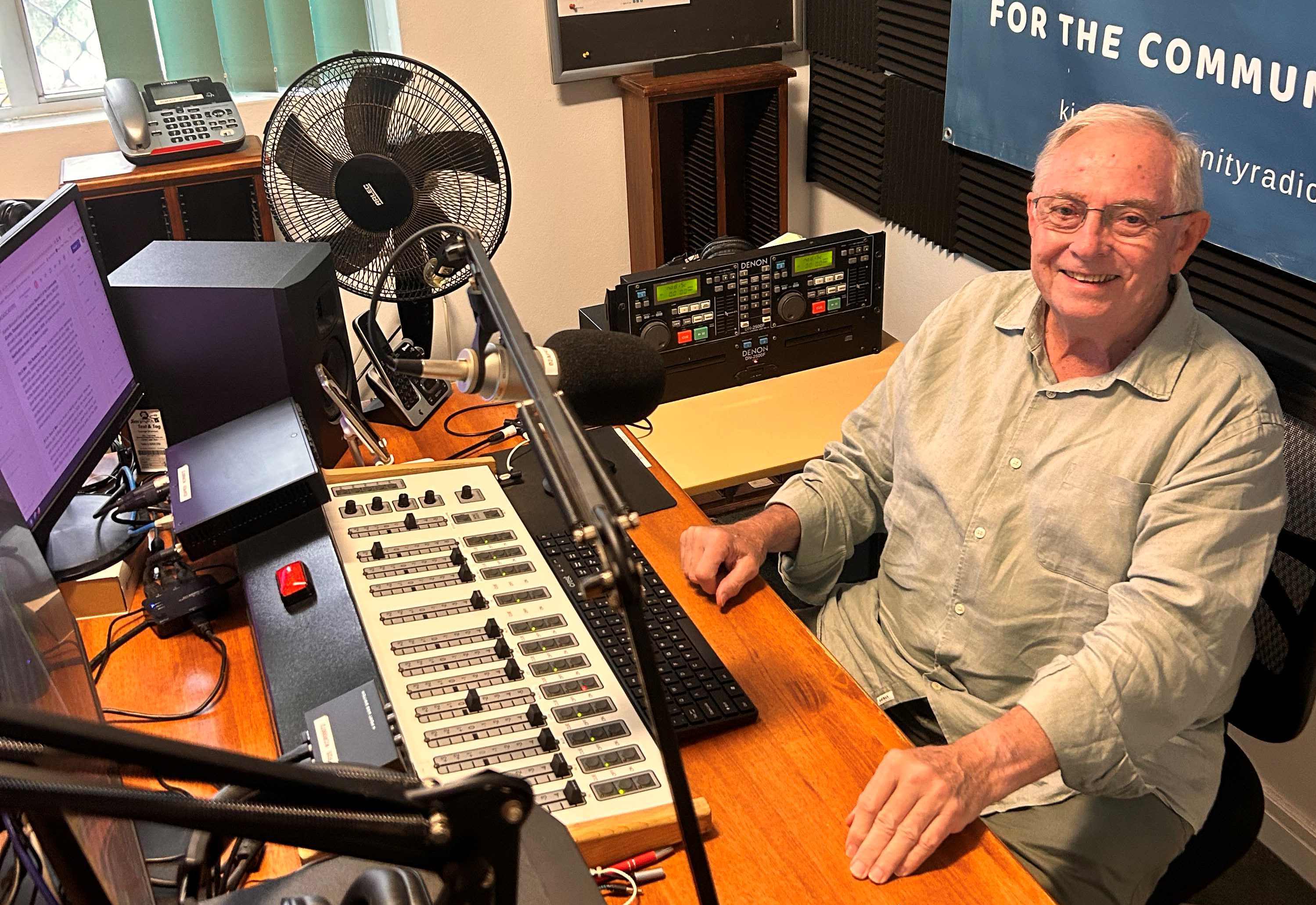
KCR is welcoming a new voice to the airwaves this year, and he brings with him a lifetime of music, radio, and community experience.Myron grew up in Melbourne in the 1970s, where his love of music was shaped by listening to community radio. Those early days of tuning in sparked a passion that would stay with him for life. Deep Purple’s Made in Japan album was an early favourite, and the Geelong second-hand markets meant he could buy cassettes for as little as 50 cents. He loved those bargain bins.Over the years, Myron went on to present programs on several well-known community stations, including 3RRR FM in Carlton, 3PBS FM in St Kilda, and 2UUU FM in Nowra. Along the way, he built a reputation for thoughtful programming and an open-minded approach to music.After moving to Kiama in 1985, Myron settled into the community while also building a long career in health. He worked across Victoria, Queensland, and NSW for more than 33 years, always keeping music close to his heart.Myron is bringing his experience and enthusiasm to KCR with a new program, METALmorphosis.The show looks at how heavy metal and hard rock developed over time. It traces the influences of Baroque and classical music, the rise of blues and rock, and the growth of modern metal in all its forms - progressive, symphonic, gothic, thrash, and more.Myron’s taste in music is broad. He enjoys everything from “baroque ’n’ roll” to progressive metal, and that wide interest is reflected in each program.Every week features a different theme, along with a regular segment called “Can’t Believe It’s True”, sharing surprising stories and little-known facts from music history.For Myron, METALmorphosis is about showing how music connects across generations and styles, and how today’s sounds are shaped by the past.With his background in community radio and his genuine love of music, Myron is a welcome addition to the KCR team.Listeners can tune in every Thursday from 6 to 8 pm on kcr.org.au and join him on a journey through the many layers and stories behind heavy music.Please note - this is paid content

Mayor's column: When music fills our streets

06 February 2026, 10:00 PM

There are a few weekends each year when Kiama feels a little different. The streets are busier, the venues hum a bit louder, and music drifts into places it doesn’t usually reach. You see familiar faces, along with plenty of new ones, all sharing the same spaces and the same moments. The Jazz Festival has long been one of those weekends — not just because of the music, but because of the feeling it creates across the town.This year looks a little different. After nearly four decades, the Kiama Jazz & Blues Festival Committee has pressed pause on the event, with plans to return for a special 40th anniversary celebration in 2027. That decision wasn’t made lightly, and it reflects just how much time, energy and commitment goes into running a festival of this scale year after year.But what hasn’t changed is the community’s love of live music — or the importance of this weekend to Kiama.When the festival went into recess, Council worked closely with local businesses and venues to help keep live music alive across town during the traditional festival weekend. The result is a community-led live music weekend, with venues curating their own performances and Council playing a simple coordinating role — helping connect people, promote what’s happening and support local effort.When music spills into streets, pubs and community spaces, something special happens. You see people of all ages out enjoying themselves. Locals mix easily with visitors who’ve travelled from near and far, drawn by great music and a beautiful setting. There’s a sense of joy and energy you can’t manufacture ... and you certainly can’t put a price on.What I’ve always loved about the Jazz Festival, and what carries through into this year’s music weekend, is the way everyday places become shared experiences. You might wander into a venue without knowing who’s playing, only to find yourself captivated by someone you’ve never heard of — and still talking about it long after the night ends. That’s the power of culture in a regional community.The festival also carries deep history. For 39 years it has been shaped by passionate locals who believed Kiama should be a place where music and creativity thrive. Many people have given their time and energy to make it what it is today, and it’s important we acknowledge those contributions — and those we’ve lost along the way. These events become woven into the fabric of a town, through friendships, familiar faces and memories people look forward to revisiting each year.In regional communities, culture and the arts don’t always get the attention they deserve. They can be taken for granted or noticed most when they’re under pressure. But moments like this remind us why they matter — not just for visitors or local businesses, but for connection, wellbeing and pride of place.Events like the Jazz Festival don’t just entertain — they shape the character of a town. They bring people into shared spaces, create memories that last well beyond a weekend, and remind us that culture has a place in everyday life, not just on special occasions.If we want Kiama to remain a place that feels alive, welcoming and connected, we need to continue valuing and supporting the events that make it so. Because when music fills our streets, it’s a sign of a community that isn’t just growing — but truly thriving.Or these moments, when our streets are filled with sound and celebration, speak to a community that honours its people, its culture and the spaces where our stories unfold.Please note - this is paid content

A watershed moment reveals the ‘real’ Bali

06 February 2026, 7:00 AM

Recently I was lucky enough to travel to Bali with a group of like-minded friends as part of a “spiritual rejuvenation” holiday.We had all marked a mid-life milestone birthday and decided it was time for our own Eat, Pray, Love moment of self care. So we left our teenage kids at home and headed to the hills for a traditional Balinese purification ritual.While we happily traversed the streets of Kuta to cries of “g’day mate, how’re ya goin” from cheerful Balinese shop owners, our real purpose was connection - not only with each other, but our spiritual selves.And we found it, deep in the mountains of Ubud, during a traditional Hindu cultural ceremony called Melakut.Don’t get me wrong, we still enjoyed Bintangs on the beach and laughed at the crude stickers and wood carvings targeting the widely loved but gently mocked Aussie Bogan traveller.It was, however, a trip to Taman Beji Griya temple for the cleansing Balinese water ritual that was at the heart of our holiday.The temple sits deep in the lush, green mountains of Ubud, surrounded by waterfalls believed to flow with holy water designed to purify and cleanse those who come to worship.The Balinese take part in the traditional Melukat cleansing ritual during a full or new moon, when the water is at its purest and has the power to wash away negative energy.Our ceremony is scheduled a few days after the full moon and we wake at dawn, filled with negative energy from the wine-soaked night before, to beat the busy morning traffic.As we weave our way up the mountain, through tiered rice paddies and small villages, the slower-paced countryside is a welcome reprieve from the hustle and bustle of Kuta’s busy streets.When we arrive at Taman Beji Griya temple we have the place to ourselves for a private ceremony. It is well worth the extra cost as the temple quickly fills with visitors by mid-morning.Taman Beji Griya has been used by local families for religious ceremonies for generations but was only opened to the public in 2017, allowing westerners to take part in purification ceremonies for the first time. Hundreds of visitors now cross the temple threshold each week and the best time to visit is early morning on a weekday.As we walk through the tropical forest to the entrance of Beji Griya we are greeted by our guide Karen Bayu Aditya Putra.Bayu is a photographer and artist - he designed the logo for the uniform worn by the temple’s guides - and is renowned for the stunning images he captures of those visiting the spiritual site.Bayu asks us to each choose a brightly coloured sarong, which we wear into the temple as we walk though waterfalls, canyons and grottos offering gifts, known as Canang Sari, to the gods.The intricate baskets, woven from palm leaves, are filled with flowers, incense and rice, and are a fundamental part of Balinese Hindu culture, representing gratitude, balance and devotion.As we approach dozens of intricately carved stone gods Bayu instructs us to take a deep breath, close our eyes, give thanks for that which we are grateful, and place a Canang Sari in front of each deity.We offer our thanks and feel our limbs begin to loosen and relax.Bayu tells us to reach out and touch the ancient, gnarled banyan tree guarding the temple’s entrance. The Balinese believe banyan trees connect the physical world to the spiritual realm.The tree - skirted in the black-and-white checked Balinese poleng cloth which represents the harmony between good and bad, light and dark - is a balance of opposites, rooted in the earth while its branches reach for the sky, its leaves smooth and limbs rough.We touch the tree and ask for a blessing.“Feel its energy, it is the home of our spirits and ancestors,” explains Bayu.While the banyan tree is an important part of the purification ritual, the temple’s waterfall is the centrepiece.As we stand underneath it, getting flogged by fast-flowing water, Bayu yells instructions over the noise: “Scream as loud as you can, let out all the bad energy”.We do as we are told and it feels oddly liberating to shout louder than the crashing water.We move to a slower flowing waterfall - a relaxation massage compared to the deep-tissue hammering of its neighbour - and Bayu tells us to “dance and give thanks for our blessings”.We laugh and dance, careful not to slip as we celebrate, holding each other upright in our silliness.Next a holy priest chants mantras to bless the water which he pours over our head - it signifies rebirth and cleansing.Bayu explains Melukat will wash away stress and bad luck, help our body and mind feel calm, bring balance and inner peace and open our hearts to blessings.“Now you will feel calm and new again,” says Bayu as he ties a band of tri-coloured string, known as tri datu, or three powers, around our wrist.The red string signifies Brahma the god of fire and knowledge, black is Vishnu the god of water and giver of life and white is Shiva the god of destruction and cleansing.“Don’t cut it,” instructs Bayu. According to local legend the band falls off when the wearer is spiritually cleansed.We leave the ceremony feeling lighter, careful not to break our tri datu and grateful for the opportunity to experience the “real” Bali and its ancient traditions and culture.

1-20 of 5588