Sweet partnership so students can bee ready to reap rewards

Danielle Woolage
29 November 2025, 10:00 PM

With HSC results looming, many students across the region are anxiously waiting for a magic number - the ATAR - to determine their career path.
But educators have reminded students that, much like consulting a magic eight-ball for life advice, HSC results do not predict the future.
Regional Industry Education Partnerships (RIEP) project officer Jenny Watts knows this only too well. As the Illawarra's Senior Project Officer for the NSW Education Department RIEP program she helps students to explore career pathways, gain workplace skills and connect with employers as an alternative option to an ATAR.
A single number does not determine a person’s worth and HSC results, while they might hold weight in a short moment in time, they are not markers of future success.
Exams are simply an opportunity for students to share the voluminous amount of knowledge they have gained over many years of education.
“There are many different pathways to success across a student’s high school journey,” says Ms Watts. “Some students are better at showing their knowledge theoretically, through written exams; others practically, through hands-on experience.
“But at the end of the day how can a 16, 17 or even 18-year-old know for sure what they want to do with their life?” asks Ms Watts. “The RIEP program gives students all the tools and skills they need to find out what their passion is and if that's what they really want to do.
“It’s a chance for students to do work experience with employers, with the possibility of school based traineeships or apprenticeships attached to the program. It’s essentially a try-before-you-buy for students and employers.
"And no matter the pathway students choose, the RIEP program opens a range of opportunities, including casual or even full-time employment, through positive networking.
“We engage every industry that you could possibly imagine, from hairdressing to plumbing to IT and bees, to agriculture and renewable energies, we cover it all.”
Recently Ms Watts teamed up with Burnett’s on Barney’s resident beekeeper Rachael Peedom to run a RIEP program for more than a dozen Kiama High School students.
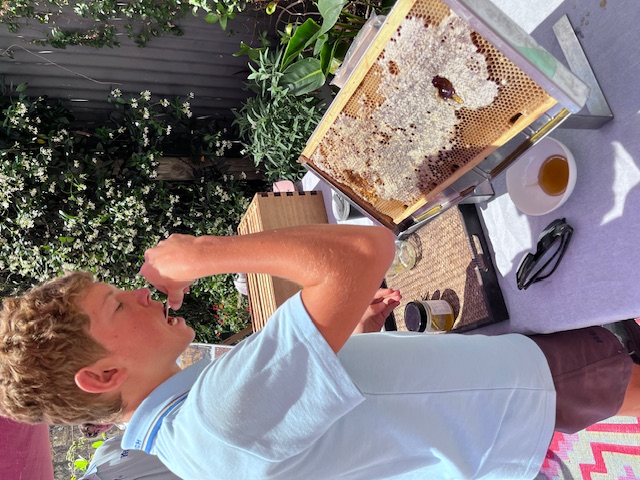
“Students learned all about the amazing world of bees, from their life cycle and hive roles to how they make honey and play a vital part in keeping our planet healthy through pollination,” explains Ms Watts.
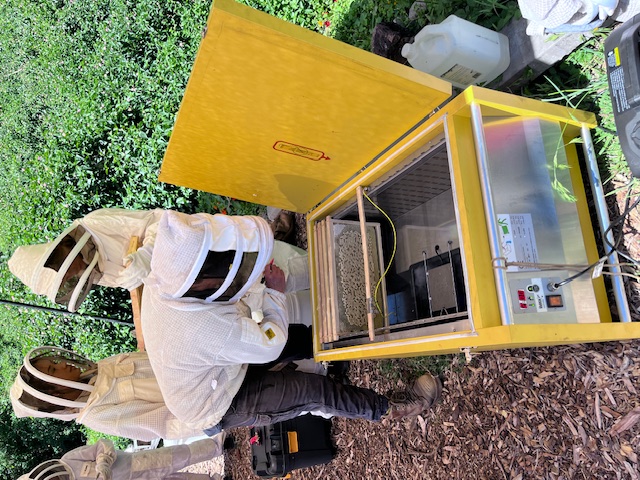
Rachael, a master at engaging students through banter and hands-on learning, had the 17 students enthralled from the moment they stepped into their beekeeping suits.
“I always ask students ‘who wants to taste bee vomit?’ because essentially that’s what honey is,” laughs the Bee Inspired business owner, who - along with producing hundreds of kilograms of honey each season - runs education programs for schools and homeschools across the Illawarra and Shoalhaven.
Rachael is one of dozens of small business owners partnering with the RIEP program to help students who may not want to go to uni, or pursue a traditional 9-5pm desk job, explore career options with the support of their teachers.
Dressed in full bee suits, students learned how to open active hives to spot the Queen Bee among the 40,000-strong population of honey producers. They also tested for the varroa mite and discovered the important steps taken to protect Australia’s bee populations from the devastating pest which, along with unseasonably wet weather, severely impacted last year’s honey production and yield.
Kiama High School Year 10 student Aleita Dummett joined the RIEP bee keeping program to “learn more about the industry”.
“I find bees and pollen really interesting and I learned a lot about the different roles of the bees in the hive, it would be cool to get some bee hives at school,” says Aleita.
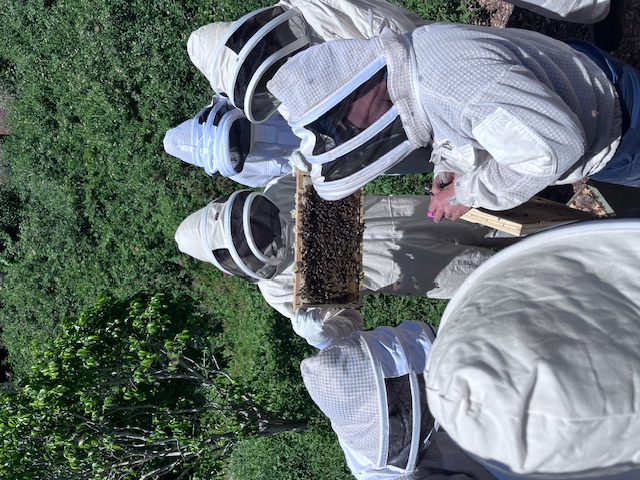
Kiama High School careers adviser Greg Miller, himself an amateur beekeeper, jumped at the opportunity to “get students out of the classroom and into a real-world environment to learn about the magic of bees.”
“Our students have learned all about pollination and the importance of bees in the food cycle,” he said. “One third of the food that goes on our plate is pollinated by bees so without them we wouldn’t have that food.”
Mr Miller said Kiama High School would look at expanding its agriculture program to include beehives.
“Judging by the feedback from the kids, they really want to see some hives with a garden where we can contribute to the things that bees do in our community.”
And the cherry on top of the beekeeping session; students got to enjoy the fruits of some of their labour - honey from the Burnett’s apiary.
Any employers interested in getting involved in the innovative skills training program can email [email protected].
NEWS