Social media ban brings challenges for teens

Danielle Woolage
12 December 2025, 7:00 AM
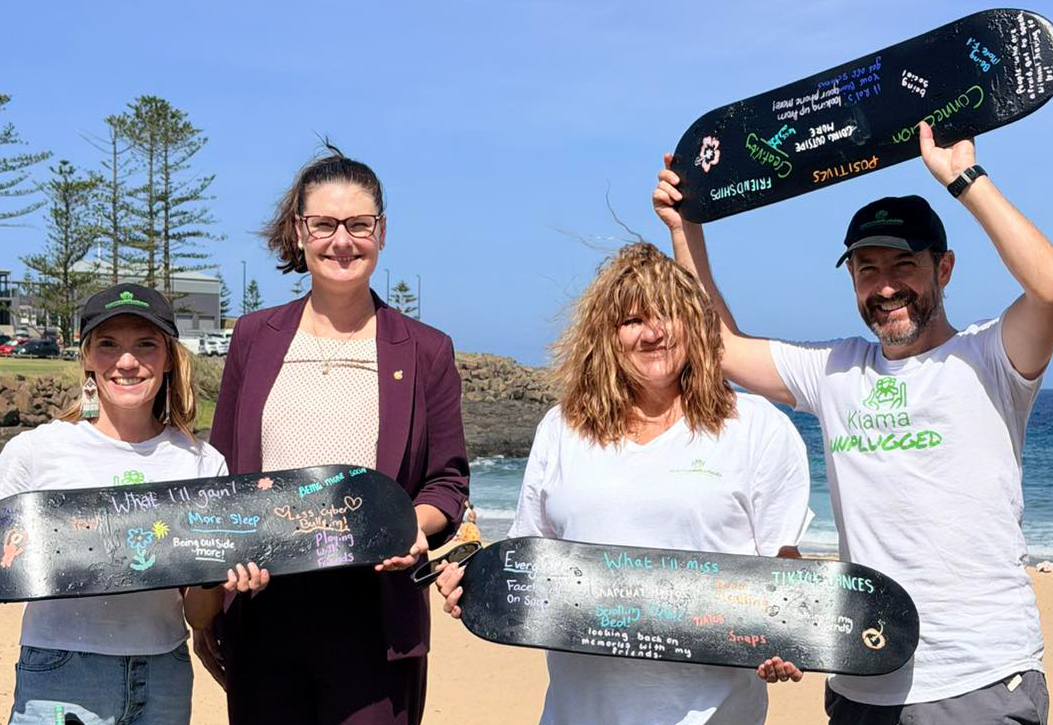 Katelin McInerney with the Kiama Unplugged crew at the markets on Wednesday.
For many parents this week’s social media ban brings a sense of relief; no more dinner table or bedtime battles over screens.
But for many young people it comes with a sense of loss and isolation from their social networks.
From Wednesday, anyone aged under 16 was locked out of accessing platforms like YouTube, TikTok, SnapChat, Instagram and Facebook and social media companies who don't enforce the ban could face hefty fines of up to $50 million.
But parents also have an important role to play in ensuring kids don’t find workarounds to the safeguards.
Kiama Unplugged founder Jane Bourne says many parents and young people have been preparing for the ban for months by joining the charity’s screen-free activities.
The Unplugged initiative - organised by Jane, a civil celebrant, and her husband Ian, a pilot, all at their own expense - has been helping the community to disconnect from their phones and reconnect with each other through a range of social activities since September last year.
Now, with the world’s gaze firmly on Australia to gauge the impact of the bans, Kiama Unplugged has stepped into the breach to help parents and young people successfully navigate the new rules.
“In the coming weeks, with the new law around delaying social media until children are 16, we know there are going to be a lot of stories to be told and shared,” says Jane.
“As the founder of Kiama Unplugged, and also Australia Unplugged, I really want to support young people and their families, and to help people see the benefits that this age delay will have.
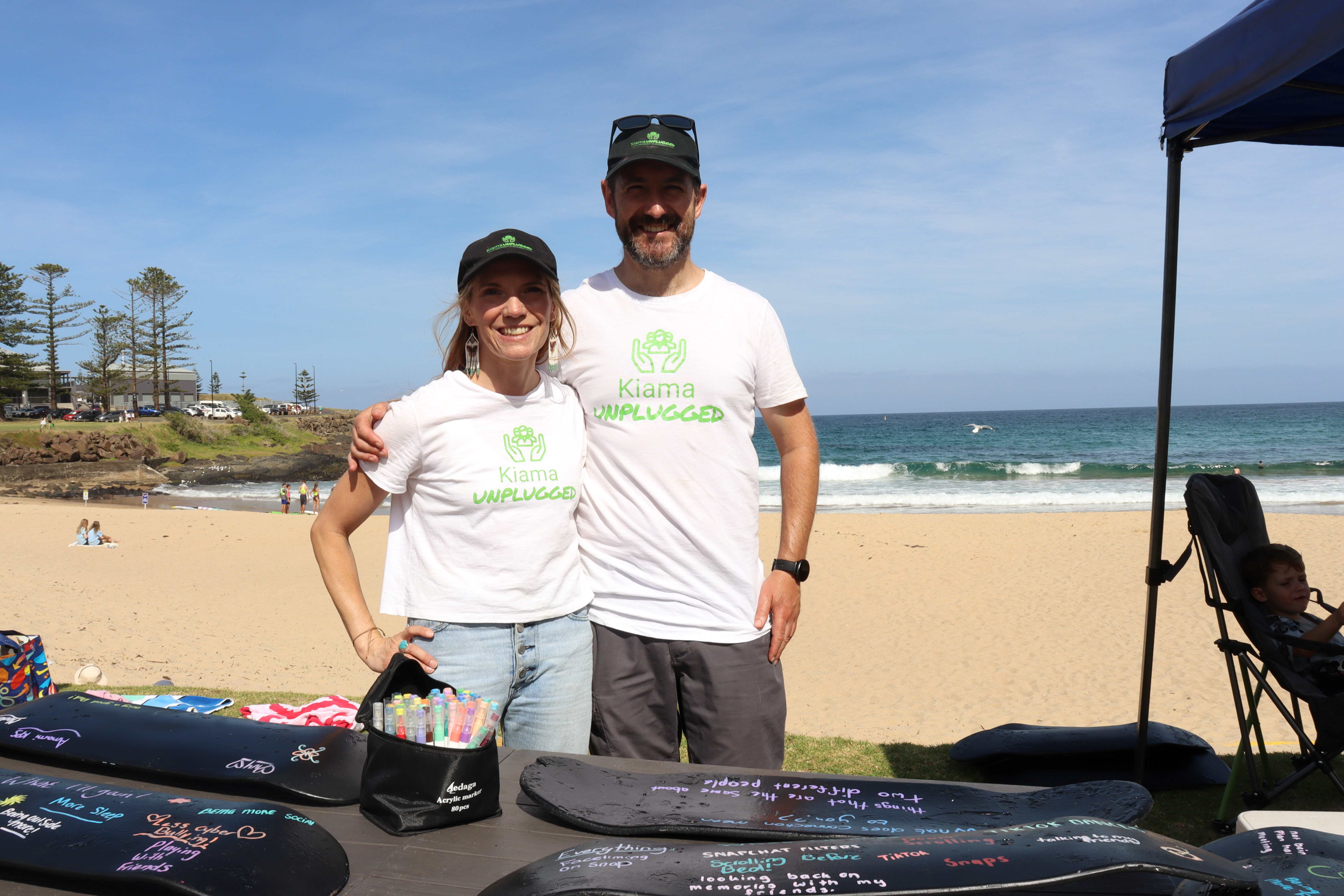
Jane and Ian Bourne. Photo: Ella Gunning
“On Wednesday we had a stall at Kiama Farmers Market and so many families engaged and connected with us about the ban.
“It's so important for parents to have conversations with their teenagers about the age delay, be curious, and find out what social media meant to them and what they'll miss. We need to be validating their emotions.”
Kiama MP Katelin McInerney popped by the market stall on Wednesday, saying the ban was “a good step in the right direction”.
“Our young people will need more support over the coming holiday period and in the next school year adjusting to their new social media free norm.
“All of us can do our bit to check in. It’s great to see Unplugged offering great screen-free alternatives for real world connection in our beautiful backyard.”
Jane believes listening to “the voice of young people” is essential to successfully navigating social media changes.
“Our information gathering session was a key driver in understanding the views of local high school aged kids so we can work alongside young people to ensure they remain socially connected when they are offline,” says Jane.
Prime Minister Anthony Albanese says the ban “will change lives for Australian kids, allowing them to just have their childhood”.
"It is one of the biggest social and cultural changes that our nation has faced," he said.
"It's a profound reform, which will continue to reverberate around the world in coming months, to assist not just this generation, but generations to come. It is about our families taking back control."
Jane says the fact that the ban is encouraging different forms of engagement and interaction means it is already working and young people are genuinely craving real social connections.
“We ran activities like decorating skateboards - kindly donated by local business Creative Kooks - and talked to young people about the positives and negatives of this ban,” says Jane.
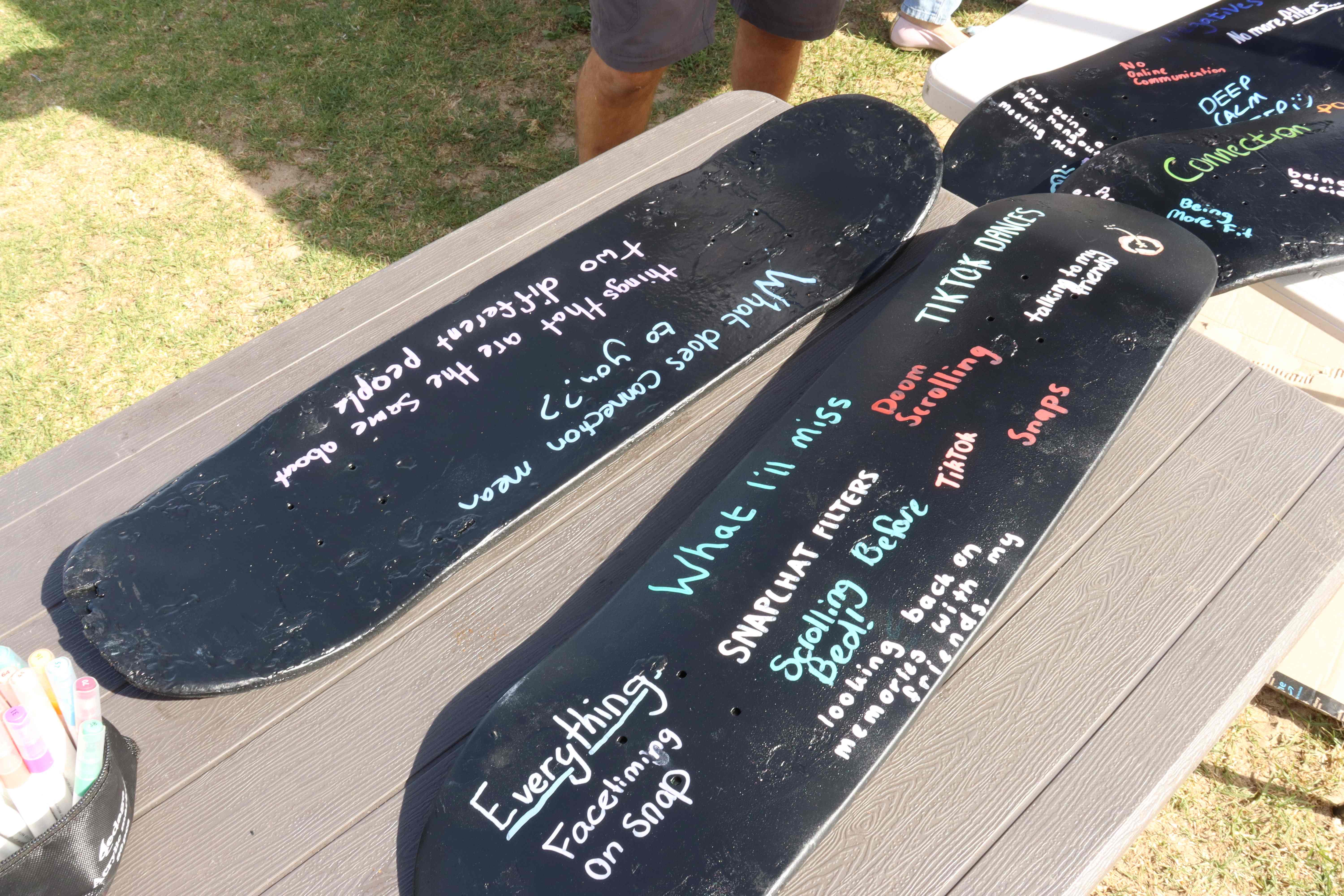
Photo: Ella Gunning
“We had games and a lucky dip to win giveaways donated by local businesses.
“There were lots of conversations about how people can get more involved in Kiama Unplugged, sign our pledge to delay smartphones and volunteer to join our youth advisory board.”
While Jane understands banning social media won’t solve all of the issues faced by teens in today’s fast-paced world, she hopes it will better protect youth mental health and in some instances, save lives, in part by reducing the online bullying many teens can face on social media.
“Online bullying follows kids from the moment they wake up, to school, to their bedroom until they finally sleep,” says Jane.
“There is often no escape and the relentless bullying through group chats, screenshots and shares can have devastating consequences.”
Kiama Unplugged has long been an advocate to “let kids be kids through play, connection, sport and support”.
“We need to replace that sense of community many kids feel through their social media channels,” says Jane.
Many experts have called for a return of the Active Kids and Creative Kids vouchers without means tests.
This would allow a wider cohort of teens to find their tribe outside of screens, without adding more financial pressure on families.
Jane also recommends making a plan for the summer holidays.
“They will have all this time that they used to spend on social media, find and encourage other ways for them to discover that sense of belonging, identity and creativity, but in real life,” says Jane.
“New outlets for creativity could be video, photo or music editing, creative coding, writing or journaling, learning a language or music.
“The way our 12- to 15-year-olds were accessing dopamine has significantly changed, and we need to help them find healthier and more positive ways to replace that.”
NEWS